State Theatre Building
The AIDS Project
ACT-UP Portland
456 Congress St.
The State Theatre
The State Theatre is one of Portland’s most iconic landmarks. While the bold marquee and eye-catching event posters are certainly striking, the building itself is full of stories. It also has a much deeper connection to the city’s LGBTQ+ community than one might glimpse from the outside.
The State Theatre first opened its doors in November 1929. theater-goers were delighted by the ornate gold carvings, sumptuous velvet drapery, and murals that adorned the lobby and auditorium of the Herbert W. Rhodes-designed building. In the beginning, the State Theatre was a multi-function venue that hosted movies, music, and theatrical performances. For the first few decades of the 20th century, the State Theatre welcomed folks of all ages. Sadly, The State Theatre saw a sharp decline in popularity throughout the 1960s due largely to the growing popularity of television.
A decade later, following a change of ownership, and in an attempt to prevent the theater from being demolished, the building was leased to a chain of adult theaters called the American Theater Company. It served as a theater for both gay and straight porn during a period in which adult cinemas were becoming more common in cities all over the US.
In 1990, after the building fell into disrepair, the State was purchased by Nick and Lola Kampf who made extensive renovations and re-opened the Theatre as a performance venue in 1993. Bowery Presents now operates the State Theatre and features a year-round calendar of often sold-out events including live music, touring drag shows, comedy, and local film festivals.
The big office building above the State Theatre holds a lot of LGBTQ+ history. The upper floors of 142 High Street have been home to queer-related administrative offices, mental health practitioners, businesses, and studios important to the LGBTQ+ community. Here we will highlight the work done by two AIDS organizations active in the late 1980s and early 1990s: The AIDS Project and ACT UP Portland.
Photos
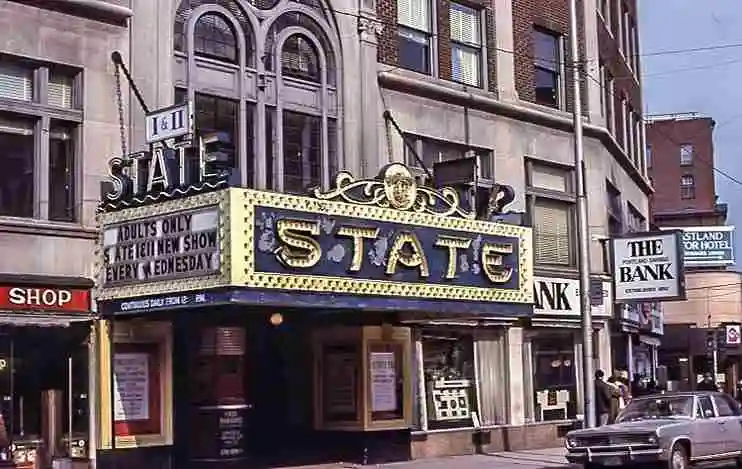
Marquee of the State Theater from February 1979 after it had become a porn theater. Portland Maine History 1786 to Present (May 16, 2012). State Theatre, February 1979.
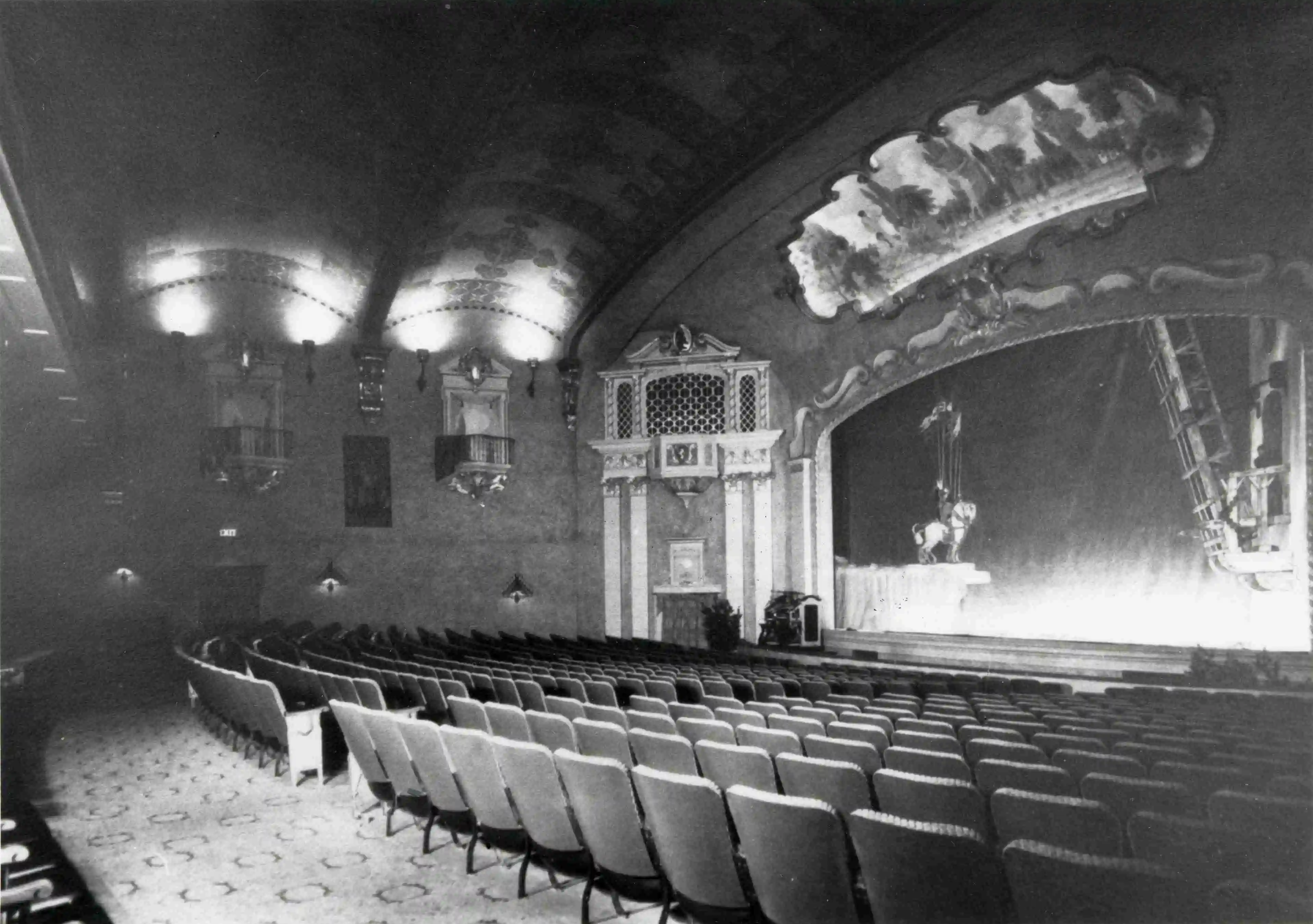
The inside of the State Theater building in the 1930s. Maine Historical Society. Hallway, State Theater, Portland, ca. 1930 [Photographic print]. (Item 12904). Maine Historical Society, Portland, Maine.
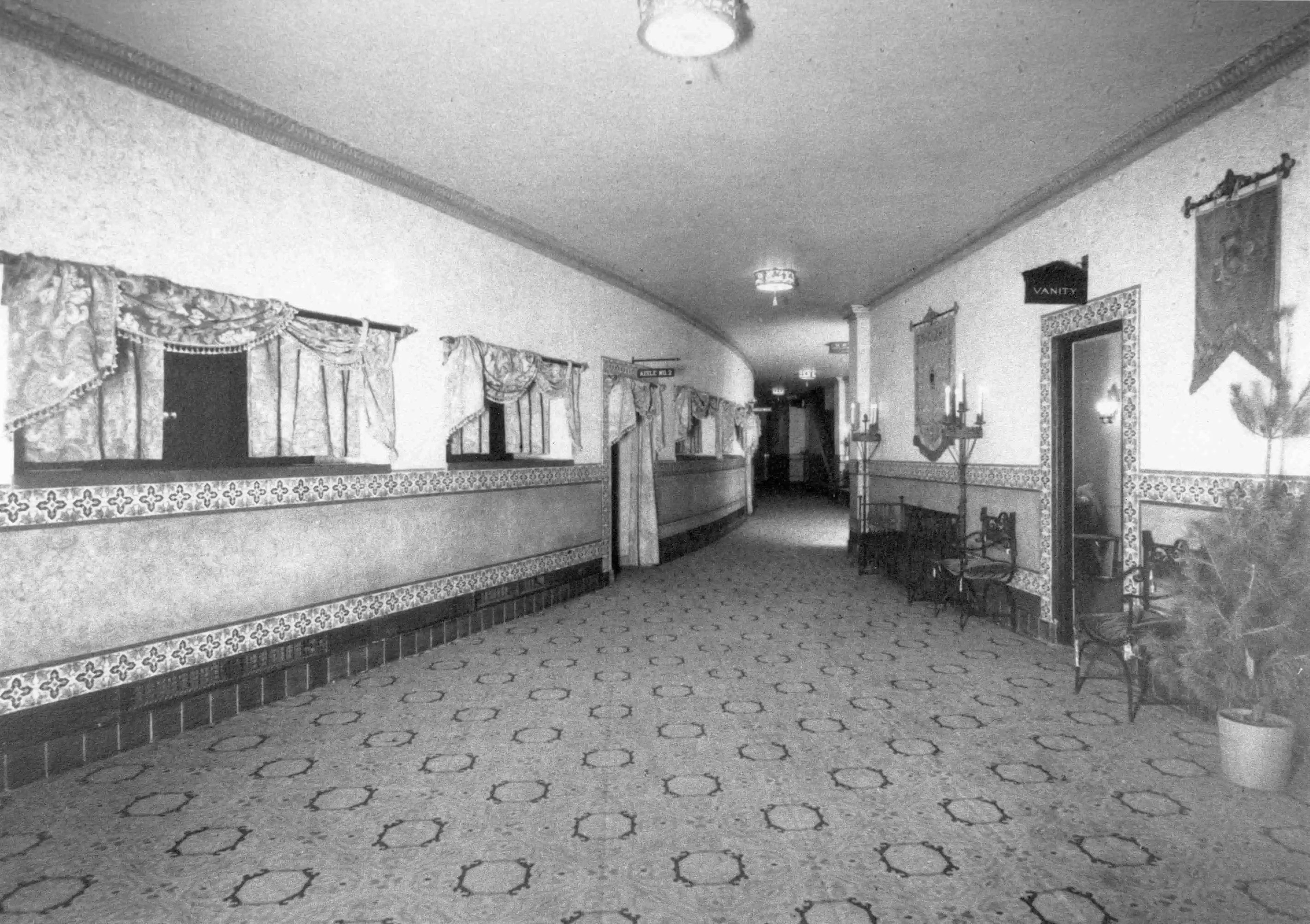
The stage inside the State Theater building in the 1930s. Maine Historical Society. State Theater, Portland, ca. 1930 [Photographic print]. (Item 12902). Maine Historical Society, Portland, Maine.
The AIDS Project
In 1983, just two years after the first AIDS cases were diagnosed in the United States, a small group began meeting in the Portland living room of Frances “Frannie” Peabody to organize a response. Frannie Peabody, an 80-year-old white glove, blueblood upper-class Yankee woman, was aware of the crisis because her beloved grandson, Peter Vom Lehn, was dying from AIDS.
In the face of profound governmental disinterest in AIDS, the activists in that living room began to develop a grassroots response. Their group, the Portland-based Gay Health Action Committee, began producing informational pamphlets and staffing an AIDS hotline. In 1986, the group transformed into The AIDS Project (TAP) and expanded their services to include HIV testing, counseling, healthcare referrals, support groups, provision of safer sex supplies and public education; in addition, they produced a newsletter.
Financial support for their work was limited, however. A fund set up by the Maine Health Foundation to assist clients with rent and other necessities quickly dried up. By the late 1980s, staff morale at TAP was low; there was a growing number of deaths and an expanding caseload of more than 90 clients.
Elected officials still largely distanced themselves from the problem. In 1988, according to the TAP Newsletter, not a single public official of any significance attended the organization’s awards dinner. According to the newsletter’s editor, “for politicians, appearing with gays and lesbians is deadly. They fear the ignorant wrath of their most small-minded constituents. They fear the caning they might get from Jasper Wyman and the Christian Civic League which practices homophobia like marching bands practice Sousa.”
Deborah Shields, who served as the organization’s Executive Director in the 1990s, observed “The discrimination, and the AIDS denial on the part of the government, were absolutely infuriating. I went with advocates to protest in front of the federal Food and Drug Administration, and I was at AIDS conferences where we would chain ourselves to government offices because they refused to do anything. It took nearly a decade to get researchers the money to develop any treatments. It made me furious and deeply sad. There were so many fabulously wonderful, talented, beautiful people who died. It’s a grief I still carry.”
In 1995, The AIDS Project moved out of the building they had occupied at 22 Monument Square into the 6th floor of the State Theatre Building. According to Shields, the move was “the beginning of a more accessible, spacious support for TAP.”
The work of The AIDS Project, however, was grindingly hard. According to one early activist, Skip Brushaber, those who were involved with TAP, “just gave and gave of themselves. The first social worker for The AIDS Project, Diane Elze, was a saint. Her case load was basically everybody. Many people who developed HIV and AIDS were totally alienated from their families because, all of a sudden, their families found out they were gay. The AIDS Project filled that gap so that people weren’t alone. When someone was close to the end of life, Diane Elze would actually get up on the bed with the person and hold them in her arms as they passed. I don’t know how she did that. I don’t know where she found the strength to do that.”
In 2002, The AIDS Project was renamed the Frannie Peabody Center and moved from the State Theatre Building to its current home at 30 Danforth Street in Portland where it continues to offer HIV testing, case management, and direct support.
Photos
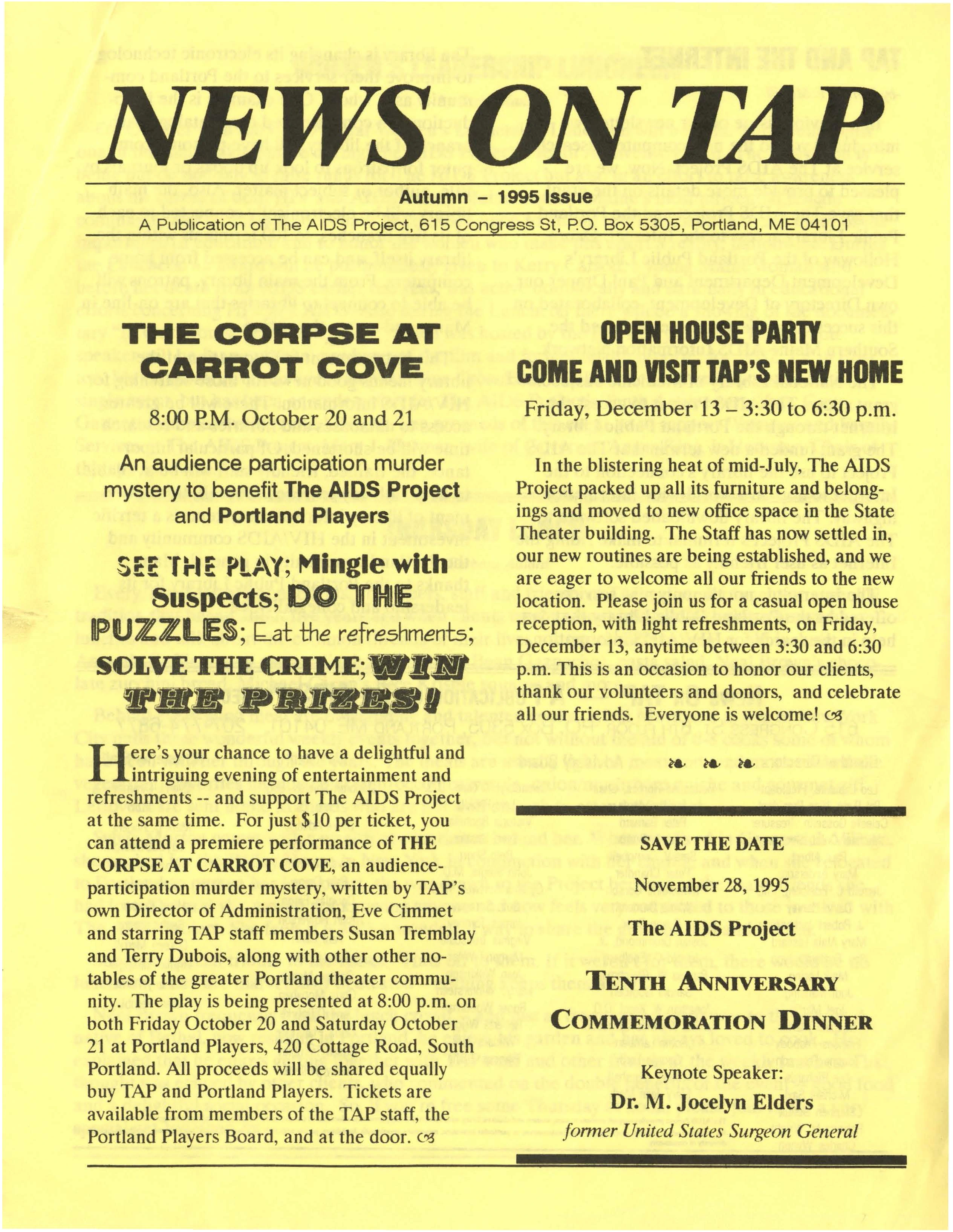
Open House Party. Citation: Cimmel, Eve and The AIDS Project, “News on Tap (Autumn 1995)” (1995). News on TAP (1995). 2.https://digitalcommons.usm.maine.edu/news_on_tap/2
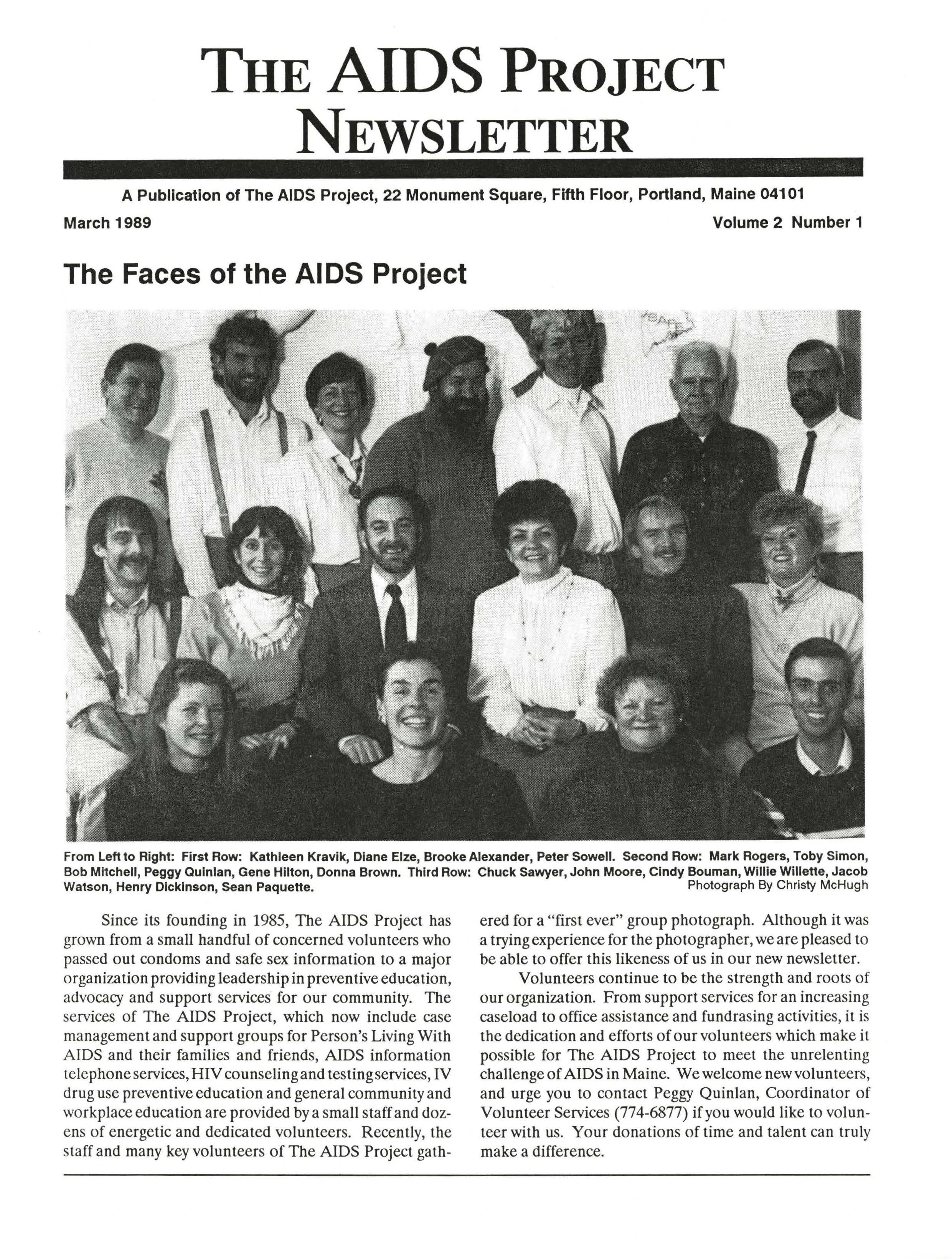
Faces of the AIDS Project. Citation: Ketchum, David and The AIDS Project, “The AIDS Project Newsletter, Vol.2, No.1 (March 1989)” (1989). AIDS Project Newsletter (1987-1991). 20.https://digitalcommons.usm.maine.edu/aids_newsletter/20
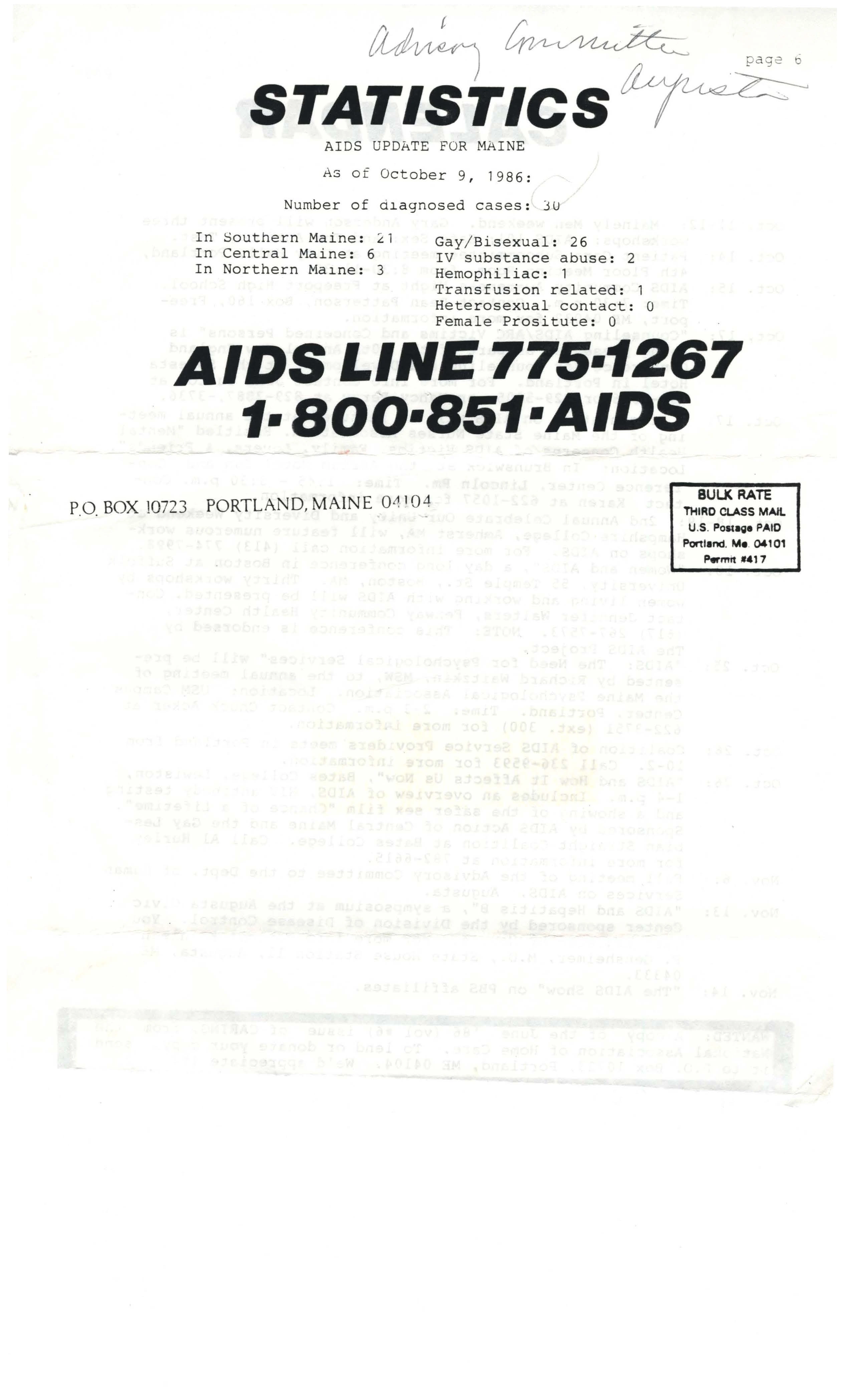
AIDS Hotline. Citation: The AIDS Project, “The AIDS Project News (October 1986)” (1986). AIDS Project News (1986). 5.https://digitalcommons.usm.maine.edu/aids_news/5
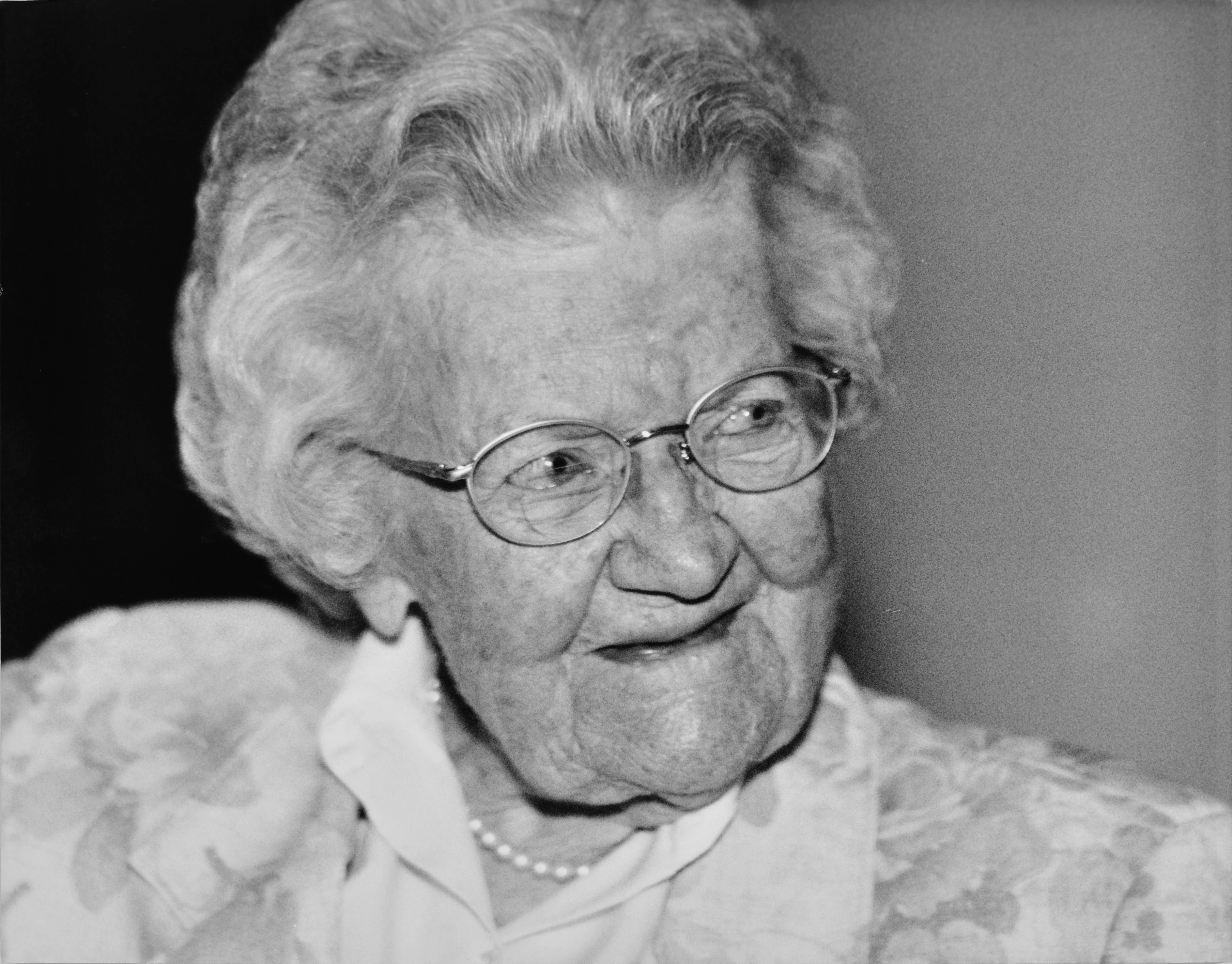
Frannie Peabody, 1999. Citation: Annette Dragon Photographs, LGBTQ+ Collection, Jean Byers Sampson Center for Diversity in Maine, University of Southern Maine Library
ACT UP Portland
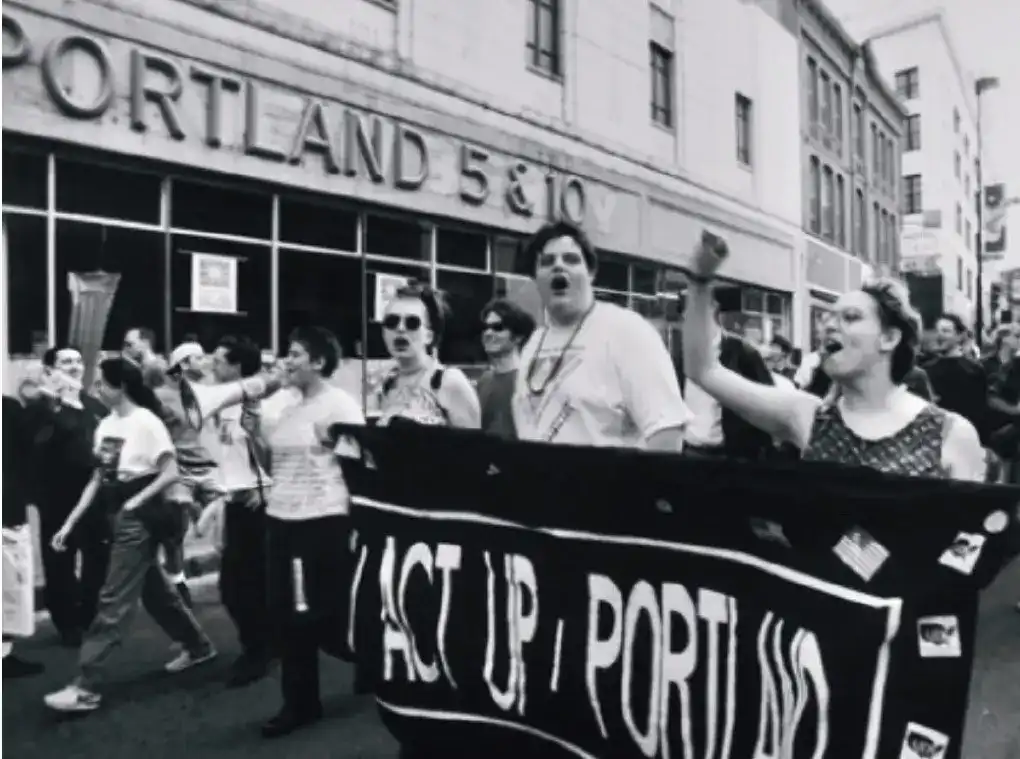
The AIDS Coalition to Unleash Power or ACT UP was first formed in New York City in 1987; soon chapters of the militant action group spread across the country. This included Maine ACT UP, which formed in 1988. In the mid-1990s, a Portland branch of the AIDS education and direct-action group opened a small office on the second floor of the State Theatre Building.
Photos
ACT UP Portland members march in a pre-Pride rally culminating with a die-in on the steps of Portland’s City Hall, May 1993. By Annette Dragon,"Act Up Fight Back Take Pictures: Ten Years of Queer Activism in Maine” Annette Dragon Photographs. LGBTQ+ Collection, Jean Byers Sampson Center for Diversity Maine, USM Special Collections. https://digitalcommons.usm.maine.edu/annette_dragon/60/

ACT UP protest demanding universal health care coverage. Protesters holding signs of fists that say"Health Care Now Bill,” and"Single Payer- NOW” June 1993. By Annette Dragon,"Act Up Fight Back Take Pictures: Ten Years of Queer Activism in Maine” Annette Dragon Photographs. LGBTQ+ Collection, Jean Byers Sampson Center for Diversity Maine, USM Special Collections. https://digitalcommons.usm.maine.edu/annette_dragon/66/
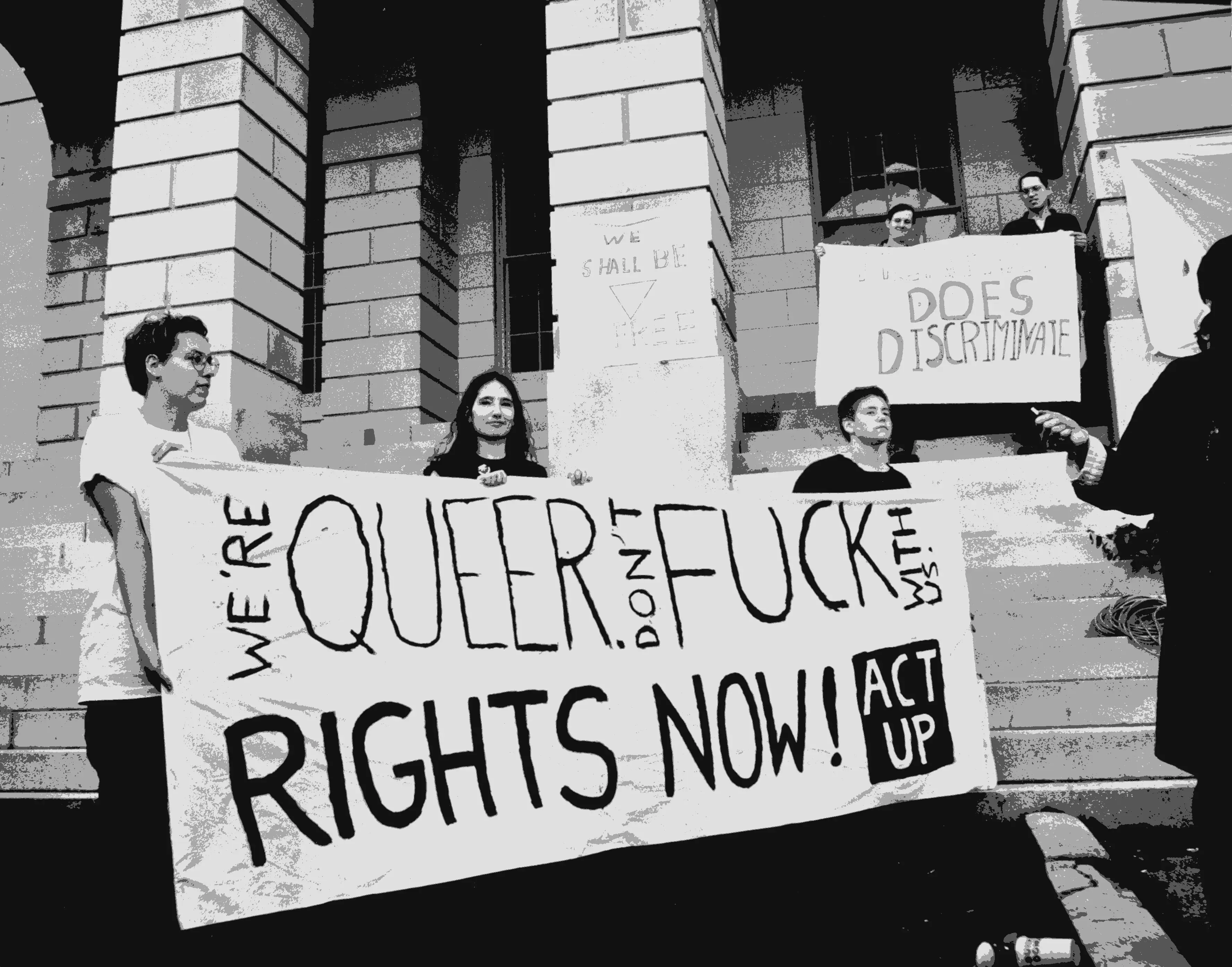
Protesters hold a sign that reads:"We’re queer. Don’t Fuck with us. Rights Now! ACT UP” on the Capitol steps at a rally in Augusta to protest Governor McKernan’s veto of the state queer-inclusive non-discrimination bill. Signs in the background read:"We shall be free” and"McKernan does discriminate” May 6, 1993. By Annette Dragon,"Act Up Fight Back Take Pictures: Ten Years of Queer Activism in Maine” Annette Dragon Photographs. LGBTQ+ Collection, Jean Byers Sampson Center for Diversity Maine, USM Special Collections. https://digitalcommons.usm.maine.edu/annette_dragon/55/
According to an oral history with local activist Erica Rand, “When I moved to Maine in the fall of 1990, I was surprised to discover that ACT UP was big enough that there had already been a political split. So there was ACT UP Maine and then ACT-UP Portland, and I was in ACT UP Portland. And within ACT UP Portland there was The Pissed Off Dyke Cell. A few years later, we got a grant from the Haymarket Foundation so we could afford to rent a small office space in the State Theatre building which was kind of amazing. It was a good place to meet and do a lot of the creative stuff like making zines and posters. We were all about being visible at a time when there was a lot of closetedness and fear of being out. We didn’t take shit that some other groups were willing to accept; like there was this idea that the way to get change was to be quiet and polite and say we’re just like everybody else. We were not quiet. The Pissed Off Dyke Cell also joined to do some radical health care activism with some separatist dykes who did not want to be ACT UP members. So we became the Pissed Off Dyke Cell/Women’s Health Action Crew (pronounced POD Cell/WHAC). We did a lot of wheatpasting and experimented, unsuccessfully, with trying to produce some safer-sex porn. A lot of us were cultural creators, including photographers like Annette Dragon and Ana R. Kissed. A lot of the people doing work for ACT UP were dykes.”
ACT UP hosted several youth-oriented groups with Portland students including Fight AIDS Transform Education (FATE) and Teen Risk Awareness Portland (TRAP). FATE produced the ‘zine Latex Everywhere Or Else (LEO) focused on safer sex and safer drug use. The group’s mission was to provide young people with access to condoms and sexual health education that went beyond the rigid abstinence-only curriculum offered in many 1990s classrooms. FATE members were known for their protests where they handed out condoms, gloves and dental dams, and rallied for the free distribution of these items at area high schools to help prevent the spread of HIV/AIDS, STIs, and unplanned pregnancies. Affiliated student groups existed in other Southern Maine communities as well, such as Scarborough for Latex and Maturity (SLAM) and Kennebunkport Individuals for Safer Sexuality (KISS). According to ACT UP Portland member Erica Rand, “The zines all had our ACT UP phone number in them and said ‘would you like to do organizing in your high school? Call this number.’ So we helped teenagers do their own organizing and activism.”
ACT UP also organized high visibility mass protests in various locations in Southern Maine. As Mike Blanchard reports, “ACT UP was a necessary by-product of the genocide that was happening during the AIDS crisis. ACT UP Portland was doing some things that I wanted to be a part of. They were doing die-ins in front of City Hall, they were doing street theater, and I started going to some ACT UP meetings. Folks were running out of patience. The AIDS Project would have someone with a caseload of 45 on Friday and come in on Monday and have a caseload of only 30; I mean people were dying so quickly, so ruthlessly, and being mistreated on the way out. It was just an awful, awful time.”
Sources
Associated Press,"AIDS Protesters Block Traffic.” Portland Press Herald. January 24, 1991. Page 1D.
Barry, William D. The AIDS Project: A History, ed. Susan Cummings-Lawrence (1997). Portland, Maine: X-Press Copy Services for The AIDS Project. University of Southern Maine, Lesbian, Gay, Bisexual, Transgender and Queer+ Collection, Jean Byers Sampson Center for Diversity in Maine, University of Southern Maine Libraries.
Barrett, Jack and Pratt, Branden. “Brushaber, Skip” (2018), Querying the Past: LGBTQ Maine Oral History Project Collection. 33. LGBTQ+ Collection, Jean Byers Sampson Center for Diversity Maine, USM Special Collections. https://digitalcommons.usm.maine.edu/querying_ohproject/33
Chapkis, Wendy. “Berger, Fred” (2017), Querying the Past: LGBTQ Maine Oral History Project Collection. 40. LGBTQ+ Collection, Jean Byers Sampson Center for Diversity Maine, USM Special Collections. https://digitalcommons.usm.maine.edu/querying_ohproject/9/
Cimmel, Eve. News on TAP, vol. 7 issue 4, June 1995. LGBTQ+ Collection, Jean Byers Sampson Center for Diversity Maine, USM Special Collections. https://digitalcommons.usm.maine.edu/news_on_tap/1
Demary, Danella, “Rand, Erica” (2017). Querying the Past: LGBTQ Maine Oral History Project Collection. 25. LGBTQ+ Collection, Jean Byers Sampson Center for Diversity Maine, USM Special Collections. https://digitalcommons.usm.maine.edu/querying_ohproject/25
Erickson, Ian. Honors Thesis Capstone Project, Bates College (2018). “You are not alone: HIV/AIDS activism in Maine.” May. https://scarab.bates.edu/cgi/viewcontent.cgi?article=1313&context=honorstheses
Karasopoulos, Peter,"ACT UP and the Politics of AIDS.” Casco Bay Weekly, February 14, 1991. Page 1.
Ketchem, David and The AIDS Project, “The AIDS Project Newsletter June 1987.” AIDS Project Newsletter, 1, 6, 11, and 14. https://digitalcommons.usm.maine.edu/aids_newsletter/1 and https://digitalcommons.usm.maine.edu/aids_newsletter/14 and https://digitalcommons.usm.maine.edu/aids_newsletter/11 and https://digitalcommons.usm.maine.edu/aids_newsletter/6
“Maine Act Out, Act Up, Act Now, Just Act” (August, 1988) Our Paper, p. 9. LGBTQ+ Collection, Jean Byers Sampson Center for Diversity Maine, USM Special Collections. https://digitalcommons.usm.maine.edu/our_paper_sac/40
News on Tap, June 1995, vol 7, no 4. https://digitalcommons.usm.maine.edu/news_on_tap/1
Oliveri, Sofia, “Rand, Erica - 2022 Follow Up” (2022). Querying the Past: LGBTQ Maine Oral History Project Collection. 96. LGBTQ+ Collection, Jean Byers Sampson Center for Diversity Maine, USM Special Collections. https://digitalcommons.usm.maine.edu/querying_ohproject/96
Shields, Deborah. “From the Director’s Desk” (1995). News on Tap. June, vol 7, no 4. https://digitalcommons.usm.maine.edu/news_on_tap/1
Wert, Micaiah, “Blanchard, Mike” (2022). Querying the Past: LGBTQ Maine Oral History Project Collection. 86. LGBTQ+ Collection, Jean Byers Sampson Center for Diversity Maine, USM Special Collections. https://digitalcommons.usm.maine.edu/querying_ohproject/86
Wert, Micaiah, “Shields, Deborah” (2023). Querying the Past: LGBTQ Maine Oral History Project Collection. 116. LGBTQ+ Collection, Jean Byers Sampson Center for Diversity Maine, USM Special Collections. https://digitalcommons.usm.maine.edu/querying_ohproject/116